

When someone searches for a service you offer, your website should help them understand what you do, what to expect and how to get in touch. First, though, they need to find it. Publishing a website doesn’t automatically make it visible in search results.
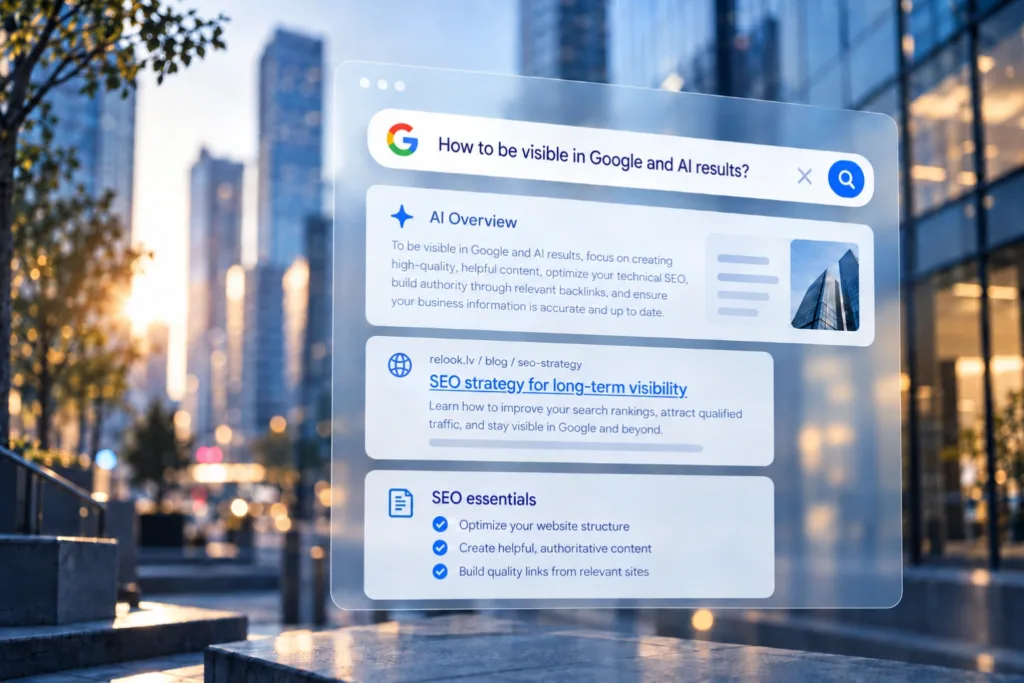
Search engine optimisation, or SEO, helps improve your website’s visibility in organic search. It involves content development, technical improvements and a clear site structure. These foundations also matter when AI search tools look for information to include in their answers.
What does SEO do for a business?
SEO helps search engines find and understand your pages so they can show them to people looking for relevant information, products or services.
For a company making bespoke kitchens, a gallery of completed projects is useful, but potential customers also have questions about materials, pricing, production times and installation. Content that answers those questions helps visitors assess the offer and gives search engines a clearer understanding of the page.
You don’t pay the search engine for each organic click, but SEO still requires time and resources. Useful content can continue attracting visitors over time, provided its accuracy, technical accessibility and performance are reviewed.
Is optimising for AI different from traditional SEO?
Traditional SEO and optimisation for visibility in AI answers share much of the same work: making a website accessible, organising it clearly and publishing reliable content. The difference is how people receive the information. In conventional search results, they choose a link. An AI search tool may instead compile an answer from several sources. Alongside rankings, it therefore makes sense to examine whether your business and content appear in those answers. Google’s AI search features build on established SEO principles, while other AI tools may have different requirements for accessing content. Clear answers, verifiable facts and examples drawn from your own experience provide a useful foundation, although none guarantees inclusion in an AI response.
Keyword research: what are your customers looking for?
Keyword research helps you understand how people search for your offer and what they ask before buying. The language your business uses internally may differ from the words customers use.
Start with questions from emails, sales conversations and enquiry forms. Then explore related search phrases and the intention behind them. Someone searching for “how to maintain a wooden fence” needs advice. Someone searching for “wooden fence installation in Riga” is looking for a specific service.
- Choose topics relevant to your business. High search volume has little value if those searches are unrelated to what you sell.
- Consider specific phrases. A product type, location or intended use can reveal more about what someone needs.
- Give each page a clear subject. You don’t need a separate page for every slight variation of a keyword. Related questions can often be answered together.
Content that helps people make a decision
A service page should explain the offer. A product page should provide the information needed to buy. A blog post should answer a specific question. Knowing the page’s purpose makes it easier to decide what belongs on it.
Let the subject determine the length. Some questions need a few paragraphs; others require examples, images and detailed explanations. Adding words to reach an arbitrary target won’t make a page more useful.
- Organise your headings. The main heading should identify the subject, while subheadings help readers find specific information.
- Write a relevant page title and meta description. Describe the content accurately and explain what visitors will find. Search engines may also use other text from the page in their results.
- Use keywords naturally. Repeating the same phrase in every paragraph makes the text harder to read. Focus on explaining the subject clearly.
- Add useful internal links. An article about choosing materials could link to the relevant products or service.
- Prepare images for the web. Reduce file sizes while retaining suitable quality, and give informative images meaningful alternative text.
- Correct outdated information. Review prices, service terms, examples and links. Changing the publication date alone doesn’t make the content current.
Technical SEO: can your pages be accessed and used?
A technical review checks whether search engines can access important pages and whether site settings prevent them from being indexed. It should also assess how easily visitors can use the website.
- Indexing. Check that important pages haven’t been accidentally excluded from search results. Not every page on a website needs to be indexed.
- Mobile usability. Text should be readable, navigation usable and enquiry forms easy to complete on a phone.
- Loading and responsiveness. Check for slow loading, elements shifting unexpectedly and buttons that don’t respond promptly.
- Links and redirects. Internal links should lead to the intended content. When a page moves, consider a redirect to its new address.
- Sitemaps and crawl settings. An XML sitemap helps search engines discover page URLs. A robots.txt file controls crawler access. They serve different purposes.
- Secure connections. Make sure HTTPS works correctly and visitors aren’t shown browser security warnings.
Links from other websites
Links from other websites can help people discover your content and give search engines additional context. The number of links alone says little about their value. Where a link appears and why it is there matter.
Original research, a detailed industry explanation or a practical resource can give others a reason to reference your website. Relevant partner sites and industry organisations can also provide useful links where mentioning your business makes sense.
Buying links solely to influence rankings shouldn’t form the basis of an SEO strategy. Nor should registering a business in unrelated directories just to increase its link count.
Local SEO for businesses serving a specific area
If you serve customers in a particular city or region, make that information easy to find. People should be able to understand where you operate, when you’re available and whether you can help them.
- Create or update your Google Business Profile if your business meets its eligibility requirements.
- Provide accurate opening hours, contact details and, where appropriate, your address or service area.
- Invite customers to leave honest reviews and respond thoughtfully.
- Explain where you provide services and whether conditions differ by location.
Separate location pages are useful when they contain information specific to each area. Copying the same text and changing only the city name offers visitors little value.
How should you measure SEO results?
Search rankings are one indicator. Your business also needs to know whether visitors are interested in the offer and whether they become customers.
Google Search Console provides information about search queries, impressions and clicks. Website analytics can help you assess organic visits and meaningful actions such as enquiries or purchases. For that information to be useful, tracking needs to be configured and tested.
Review trends over time and account for seasonality. Check whether growth comes from people searching for your business name or from improved visibility for broader product and service topics.
AI visibility needs careful interpretation too. You can review identifiable referral visits and check whether your business appears in answers to relevant questions. However, answers can vary between users and over time. A single response isn’t a reliable measure of overall visibility.
There is no universal timeline for SEO results. Competition, the website’s starting point and the scope of changes all matter. A useful plan explains what will be improved, why it matters and how progress will be assessed.
Relook’s approach to visibility in Google and AI search
We start with the offer and the questions customers ask before buying. We check whether the website answers those questions, whether important pages are accessible and whether information about the business is accurate. That review informs the work plan.
- Research customer searches and questions. We examine how people look for the service, what they compare and what they need to know before deciding. We also use selected questions to review the visibility of the business and its competitors in AI search tools.
- Check technical accessibility. We review indexing, internal links and whether important content can be read by search engines. Where relevant, we also check access settings for the crawlers used by selected AI search tools.
- Fill gaps in the content. We explain processes, service terms and pricing factors on relevant pages. Where useful, we add comparisons and answers to common questions.
- Show the business’s experience. We use real project examples, specialist explanations and original data. Sources and authors are identified where they help readers assess credibility.
- Review business information. We check that service descriptions, contact details and service areas are accurate across the website, business profiles and relevant industry listings.
- Assess visibility and business results. We track search performance, enquiries, purchases and identifiable visits from AI tools. We repeat selected question checks while accounting for variation in AI responses.
We prioritise work according to the website’s needs. If an important service page is inaccessible to search engines, we address that first. If customers can’t find the information they need to choose, we improve the content. Each recommendation should have a clear reason behind it.
Want to improve your business’s visibility in Google and AI search? Get in touch with Relook. We’ll review your website, content and available data to establish priorities and prepare a practical SEO plan.